
Autodesk releases Arnold 7.5.2 with 3D Gaussian Splatting
A 3D Gaussian Splat of an insect relit inside Arnold using the new Gaussian Splat Shader.
Autodesk has released Arnold 7.5.2, the latest version of the production renderer, adding support for rendering 3D Gaussian Splats (3DGS).
The release also feature updates to toon shading, render denoising, USD workflows, and to Flow, the new cloud rendering service currently available free to all Arnold users.
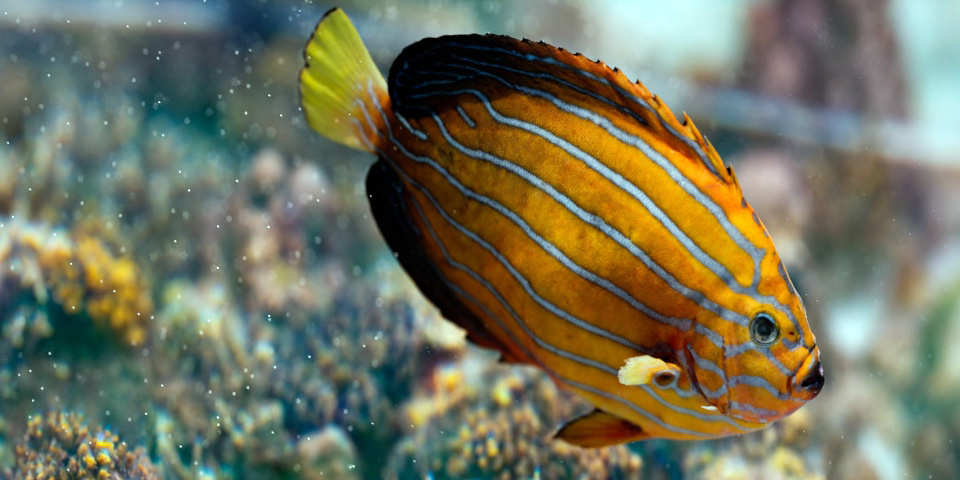
Another 3D Gaussian Splat relit and rendered inside Arnold. You can see more examples on Autodesk artist Lee Griggs’ website and on his YouTube channel.
Import, relight and render 3D Gaussian Splats
Arnold 7.5.2 makes Arnold the latest CG application to support 3D Gaussian Splats.
Increasingly being adopted in VFX and virtual production, 3D Gaussian Splatting provides a new way to reconstruct real-world objects from source images or video and render them in 3D.
In Arnold, the main way to ingest 3DGS data is to use the existing Points node to load it from an imported PLY file, or import it directly as a per-point array.
However, Arnold 7.5.2 also introduces “preliminary support” for the new Gaussian Splat schema introduced in the USD 26.03 spec, making it possible to render 3DGS data in USD files.
A new Gaussian Splat Shader makes it possible to adjust the lighting of imported Splats, including by relighting the splats entirely with Arnold scene lights.
New nodes for cel shading and non-photorealistic rendering
Arnold 7.5.2 also extends non-photorealistic rendering workflows, with a new Tone Zones node.
Aimed at cel shading workflows, it splits RGB lighting into up to eight discrete brightness bands, each of which can be tinted independently, or rendered as a separate AOV.
In addition, a new Shader to RGBA node evaluates lighting for a surface shader, including Open PBR Surface, and outputs the result as RGBA data that can be used in a shading tree.
The RGBA values can then be fed into a Ramp shader for non-photorealistic rendering.
Other workflow and performance improvements
In addition, Arnold now supports the current UsdLux standard for USD lights.
The change means that cone shaping controls and IES photometric profiles are now supported on all light types, including cylinder, disk, quad and mesh lights, not just spot and sphere lights.
The update also improves the quality of the output from Noice, Arnold’s native denoiser, resulting in sharper denoised images with fewer pixel artifacts.
In addition, GPU scene updates are now “noticeably faster”, particularly when making interactive edits to meshes, and loading meshes from PLY files is now “about 1.2x to 1.4x faster”.
Support in the integration plugins
All of Arnold’s integration plugins have been updated to support the new features:
3ds Max: MAXtoA 5.9.3
Cinema 4D: C4DtoA 4.9.2
Houdini: HtoA 6.5.2
Katana: KtoA 4.5.2
Maya: MtoA 5.6.2
Flow Render: support for rendering scenes over 5GB in size
Outside the core application, Flow Render, the experimental new cloud rendering service launched alongside Arnold 7.5.1, now supports scenes larger than 5GB in size.
Scenes are also now automatically validated on upload, so files that lack a camera or defined render outputs now generate a failure message.
Aimed mainly at indie artists who want to avoid tying up local machines while rendering, Flow Render is currently free to all Arnold users, for up to 40 hours of rendering per month.
System requirements and availability
Arnold 7.5.2 is available for Windows 10+, glibc 2.28+ Linux and macOS 12.0+. Integrations are available for 3ds Max, Cinema 4D, Houdini, Katana and Maya.
GPU rendering is supported on Windows and Linux only, and needs a compatible NVIDIA GPU.
The software is rental-only, with single-user subscriptions costing $55/month or $430/year.
Read a full list of new features in Arnold 7.5.2 in the online documentation
Have your say on this story by following CG Channel on Facebook, Instagram and X (formerly Twitter). As well as being able to comment on stories, followers of our social media accounts can see videos we don’t post on the site itself, including making-ofs for the latest VFX movies, animations, games cinematics and motion graphics projects.