
RTX Render for Character Creator and iClone is now in open beta
Reallusion has released RTX Render, a new path traced rendering mode for Character Creator and iClone, in open beta.
The new mode makes it possible to render 3D characters inside the character creation and character animation tools with “near-offline render quality”.
It is available to existing users of Character Creator 5 and iClone 8, including the new free iClone Personal edition, via a separate beta build.
Once production-ready, RTX Render will be rolled out in free updates to both applications.
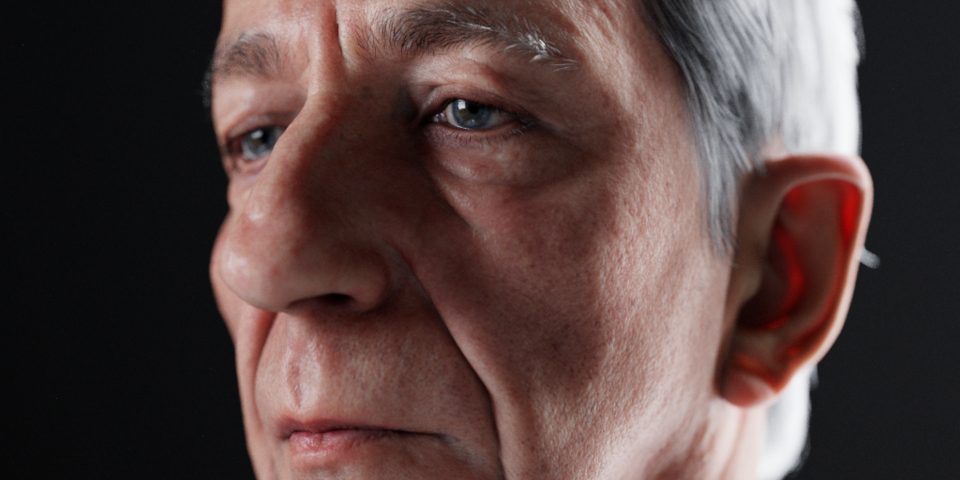
A new, higher-quality alternative to the existing DirectX 11-based render mode
Available as an alternative to the existing DX11 render engine, RTX Render displays assets, particularly 3D characters, inside Character Creator and iClone with much higher visual fidelity.
Key differences include subsurface scattering for skin, “real camera depth of field”, and a material system with transmission, coat and sheen components, plus dedicated hair controls.
Users can toggle between the two renderers, with settings updating automatically, making it possible to “reach near-offline render quality directly inside their existing workflow”.
The new render mode comes with an accompanying library of 55 readymade materials (clear coat and subsurface scattering materials, glass and fabrics) and 18 portrait lighting presets.
Based on NVIDIA’s Omniverse technology, and needs a NVIDIA GPU
RTX Render gives Character Creator and iClone users access to much higher-quality native rendering than they have had for some years.
Both applications used to have a paid-for plugin based on the Iray renderer, but it was discontinued in 2023, with users advised to move to NVIDIA’s newer Omniverse framework.
The new RTX Render mode takes Omniverse’s rendering technology and integrates it directly into the software, removing the need to export files to an external application.
Although Reallusion provides live link tools – free to indie artists – for rendering characters or animations inside Unreal Engine, RTX Render offers a much simpler workflow.
The downside, if you use an AMD or Intel GPU, is that it only works on NVIDIA hardware: at least a GeForce RTX 3060, but Reallusion recommends a GeForce RTX 4070 Super or better.
Currently available via a separate beta build, and due in a free update in future
RTX Render is currently available via separate beta builds of Character Creator and iClone that users can install alongside their existing software.
The initial beta has a number of known limitations, and doesn’t currently support all of the native light types and render formats, or less standard content like terrain or particle systems.
Once the new render mode is production-ready, Reallusion has confirmed that it will be made available as a free update to users of both applications.
Price and system requirements
RTX Render is available in separate beta builds of Character Creator and iClone. To use it, you need to have an existing version of Character Creator 5.x or iClone 8.x installed.
The render mode requires a NVIDIA GPU: the minimum is a GeForce RTX 3060, but Reallusion recommends a GeForce RTX 4070 Super or better.
Character Creator itself is compatible with Windows 10+. A perpetual license costs $299. Subscriptions start at $29/month or $99/year.
iClone is compatible with Windows 10+. A perpetual license of the full edition costs $599. Subscriptions start at $59/month or $199/year. iClone Personal is free.
Read more about the RTX Render open beta on Reallusion’s website
Find technical information about the open beta on Reallusion’s forum
(Includes installation instructions and the link to register for the open beta)
Have your say on this story by following CG Channel on Facebook, Instagram and X (formerly Twitter). As well as being able to comment on stories, followers of our social media accounts can see videos we don’t post on the site itself, including making-ofs for the latest VFX movies, animations, games cinematics and motion graphics projects.