
tyFlow 2.1 adds PhysX-powered vehicle rigging and simulation
Tools developer Tyson Ibele has released tyFlow 2.1, another major update to his popular particle and multiphysics add-on for 3ds Max.
The release adds a complete new PhysX-based vehicle rigging and simulation toolset.
A versatile particle-based multiphysics system for VFX and motion graphics work
tyFlow began life as a “complete rewrite” of Particle Flow: a next-generation replacement for 3ds Max’s ageing native particle system.
Over time, it evolved into a multiphysics system, making it possible to simulate granular fluids like sand, rigid bodies, soft bodies and cloth, and even crowds.
More recent updates have also added a terrain-generation system, AI rendering, and – most recently – gaseous fluid simulation for smoke and fire.
The simulation core is CPU-based, while individual solvers are GPU-based.
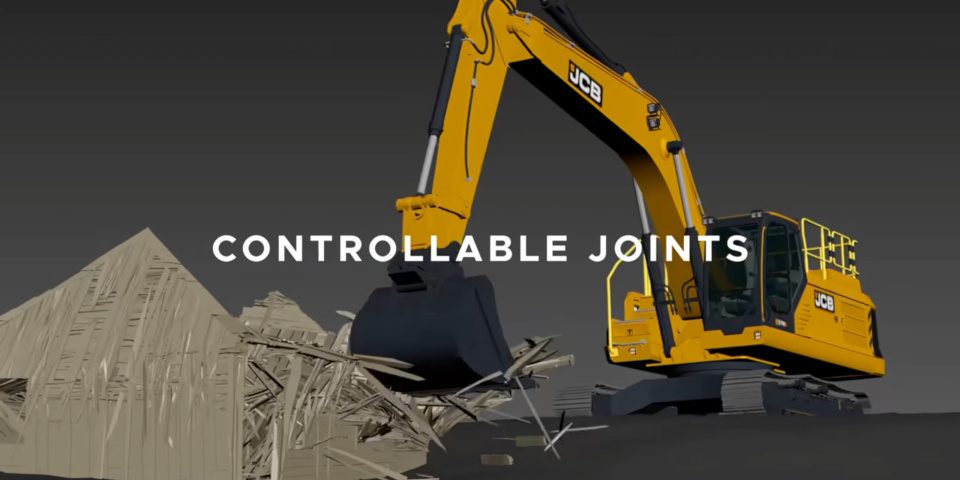
tyFlow 2.1: PhysX-based vehicle rigging and simulation
To that, tyFlow 2.1 adds another new toolset: PhysX-based vehicle rigging and simulation.
It comprises a set of specialized vehicle operators, helpers, and flow presets.
Used in combination, they make it possible to set up physics-based animation rigs for vehicles, then deploy them in multi-vehicle simulations.
There are presets for cars, trucks and tanks, but the demo video that Ibele shared on LinkedIn shows a range of other vehicles, including lorries and a mechanical excavator.
According to the video, the toolset provides a range of advanced capabilities, including dynamic suspension, tow physics, and procedural skids.
Other changes: new Gaussian Splatting workflows and performance improvements
The most recent update to 3ds Max, 3ds Max 2027.2, added a 3D Gaussian Splatting toolset, and tyFlow 2.1 takes advantages of those capabilities.
Users can now import objects with the Gaussian Splat interface in the Birth Flow operator and tyMesher object, and export Gaussian Splat data from tyFlow and tyCache objects.
Other key changes include a new advection mode in the Birth Inferno operator – part of the new gaseous fluid simulation toolset – that reduces GPU memory usage by 30%.
Price and system requirements
tyFlow 2.1 is compatible with 3ds Max 2020+. Some of its GPU-accelerated features are hardware-agnostic; others are CUDA-based and require a compatible NVIDIA GPU.
tyFlow Free, the free edition, includes all of the simulation tools, and can be used commercially, but lacks CPU multithreading, GPU acceleration, or cache export.
tyFlow Pro costs $495 for a perpetual node-locked license; $645 for a floating license.
Read a full list of new features in tyFlow in the online documentation
Visit the tyFlow product website
Download the free edition of tyFlow (Does not require registration)
Have your say on this story by following CG Channel on Facebook, Instagram and X (formerly Twitter). As well as being able to comment on stories, followers of our social media accounts can see videos we don’t post on the site itself, including making-ofs for the latest VFX movies, animations, games cinematics and motion graphics projects.