
BiteTheBytes unveils World Creator 4
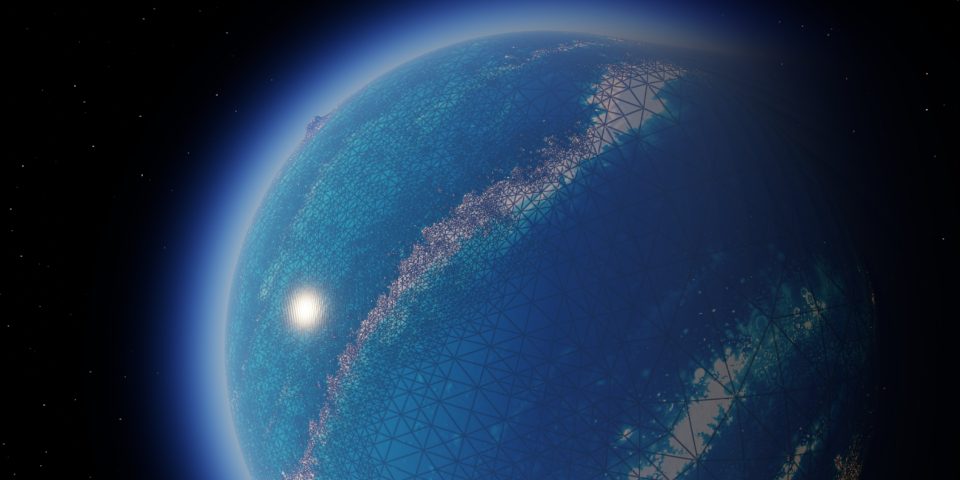
BiteTheBytes has unveiled World Creator 4, the next major version of its GPU-based terrain-generation software for game development, motion graphics and VFX work.
The release, due next month, will introduce a new core architecture, enabling the software to scale from generating conventional terrain to complete planetary environments.
Other key changes include a node-based terrain authoring environment, a new game-style real-time render engine, batch processing, and a MCP server to connect to external AI tools.
World Creator 4 will also be the first version of the software to be available for platforms other than Windows, with BiteTheBytes aiming to add support for both macOS and Linux.
A procedural GPU-based terrain generator used by leading games and VFX studios
World Creator enables artists to create terrain through a combination of procedural and manual workflows.
Artists can create terrain using a layer-based workflow, sculpting the basic 3D forms, and generating linear land forms like mountain ranges, rivers and roads along vector paths.
The terrain can be modified using filters, including those mimicking the effects of erosion and sediment deposition, previewing the results using World Creator’s built-in ray tracing renderer.
Users can export terrain to DCC applications and game engines in 3D formats like OBJ, FBX and glTF, or as 2D texture maps, including height maps and flow maps, with support for 32-bit EXRs.
The software has been used by artists at games and VFX studios including Blizzard Entertainment, Crytek, Blur Studio and Cinesite.
World Creator 4: a major overhaul of the software
World Creator 4 is a change of version numbering for the software, BiteTheBytes having used year-based versioning for some time now, so it follows on from World Creator 2026.4.
But more than that, it’s a major update, both above and under the hood, changing World Creator’s core architecture, core workflows, and the scale of the environments it can create.
Now scales from terrestrial terrain to complete planets
The biggest change is one of scope: World Creator 4 will scale from generating chunks of terrestrial terrain to complete planetary landscapes.
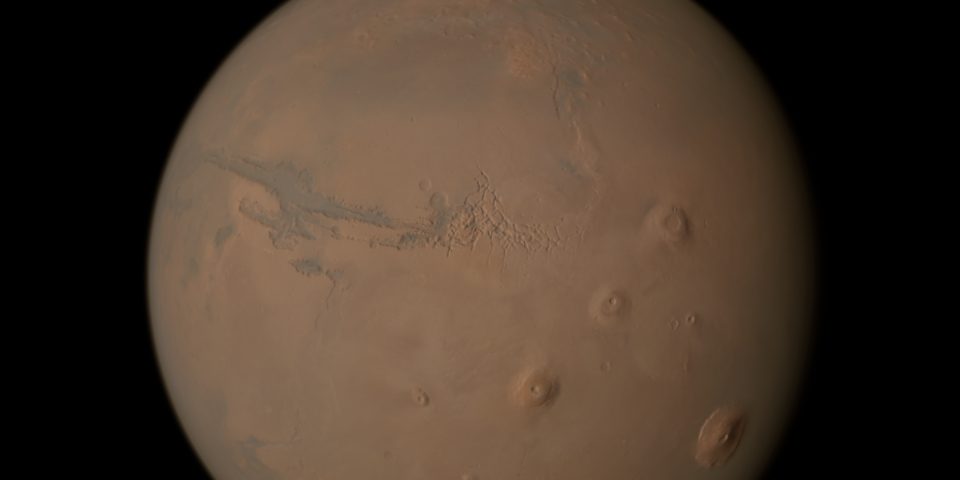
It will be possible to export the height and distribution data in a format that can be mapped onto a sphere, making it possible to create entire CG planets.
The workflow will be made possible by World Creator’s new core architecture, which is powered by BiteTheBytes’ Cloddy SDK.
In the 2000s, Cloddy was the firm’s original flagship product, used in non-entertainment applications like GPS navigation systems and helicopter training simulators.
BiteTheBytes has now updated the SDK for modern hardware, providing a “fully GPU-driven planetary terrain pipeline”, extending real-world data with procedural detail.
It’s designed to process very large data sets: the render above is based on a 9GB USGS DEM model of Mars, which BiteTheBytes says is navigable in real time inside World Creator.
The firm plans to support MapTiler streaming and “expanded heightmap, DEM, and planetary data workflows”, although it isn’t clear if that will be in the initial release.
Node-based editing, unrestricted terrain sculpting, and new procedural models
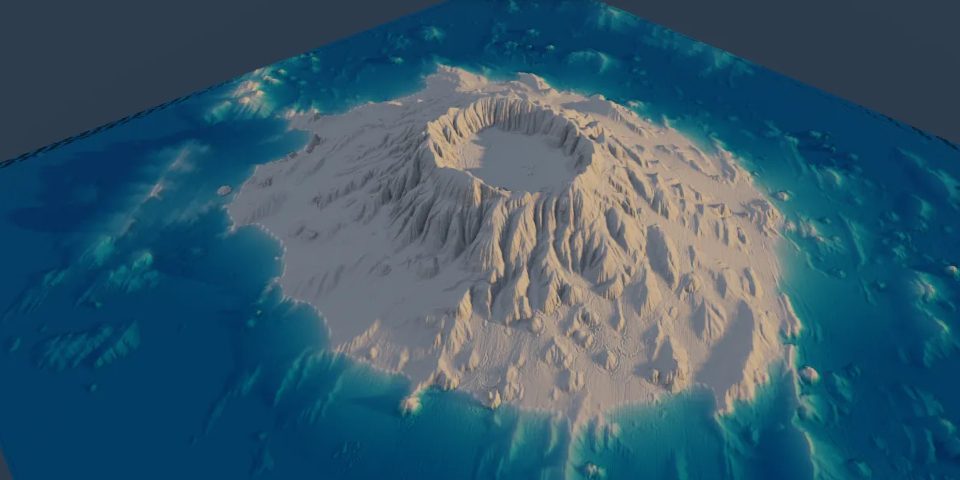
World Creator 4 will also supplement the software’s layer system with a new node view, making it possible to generate terrain using both node- and layer-based workflows.
The release will also implement “direct heightfield sculpting without the old level step system”.
Other changes include new models for procedural erosion, water and sand deposition; new high-detail filters; new object distribution controls; and over 110 procedural noise types.
New game-style render supplements the existing path tracer
The update will also introduce an additional polygon-based renderer, “bringing conventional real-time game rendering alongside path tracing”.
Both the new renderer and the existing path tracer will support NVIDIA’s render upscaling and frame interpolation system DLSS 4.5.
Batch processing, new MCP server, and support for macOS and Linux
New pipeline features include a batch processing system, making it possible for studios to handle repetitive tasks more efficiently.
The release will also feature an integrated MCP server, making it possible to control World Creator with external AI tools like Claude and ChatGPT.
And last, but not least, the formerly Windows-only software is finally coming to macOS and Linux: BiteTheBytes says that it is “pushing to have Linux ready” for the launch.
Price, system requirements and release date
World Creator 4 is due for release in November 2026. BiteTheBytes hasn’t announced any price changes.
The current stable version, World Creator 2026.4 is available for Windows 10+. Integration plugins are available for Blender, Cinema 4D, Godot, Houdini, Unity and Unreal Engine.
For artists earning under $100,000/year, Indie licenses currently cost $149. Rental costs $59/year.
For artists earning under $200,000/year, Professional licenses cost $289. Rental costs $99/year.
For studios with revenue under $1 million/year, Studio licenses cost $499. Rental costs $179/year.
For the largest studios, perpetual Enterprise licenses cost $1,499. Rental costs $529/year.
Read more about World Creator 4 on BiteTheBytes’ Discord server
Visit the World Creator product website
Have your say on this story by following CG Channel on Facebook, Instagram and X (formerly Twitter). As well as being able to comment on stories, followers of our social media accounts can see videos we don’t post on the site itself, including making-ofs for the latest VFX movies, animations, games cinematics and motion graphics projects.