
Sneak peek: Houdini 22
SideFX has released a sneak peek video showing the new features in Houdini 22, the next major version of its procedural 3D software for VFX, game development and motion graphics.
Although it doesn’t include detailed descriptions of the new features, the video suggests that Houdini 22 will introduce a new set of tools for creating, lighting, and rigging 3D Gaussian Splats.
The video also shows a lot of updates to Copernicus, Houdini’s 2D and 3D image-processing framework, plus new features for character animation, simulation, and USD world building.
More details will be announced in a SideFX keynote on 22 June 2026.
No Houdini 21.5 this time around
SideFX has been releasing sneak peeks for major updates to Houdini for some years now, but the one for Houdini 22 is a departure from tradition in a couple of ways.
First, under its usual release schedule, SideFX would be putting out Houdini 21.5 around now: the previous major release, Houdini 21, came out less than a year ago.
Even SideFX’s point-five updates are more feature-rich than most developers’ full-point releases, so it may just be that the company has changed its version numbering to reflect this.
Second, SideFX hasn’t included a title crawl at the end of the video listing all of the new features in Houdini 22.
If past releases are anything to go by, there will be a lot of other features in the update that aren’t shown in the video – but at the time of writing, we don’t know what they are.
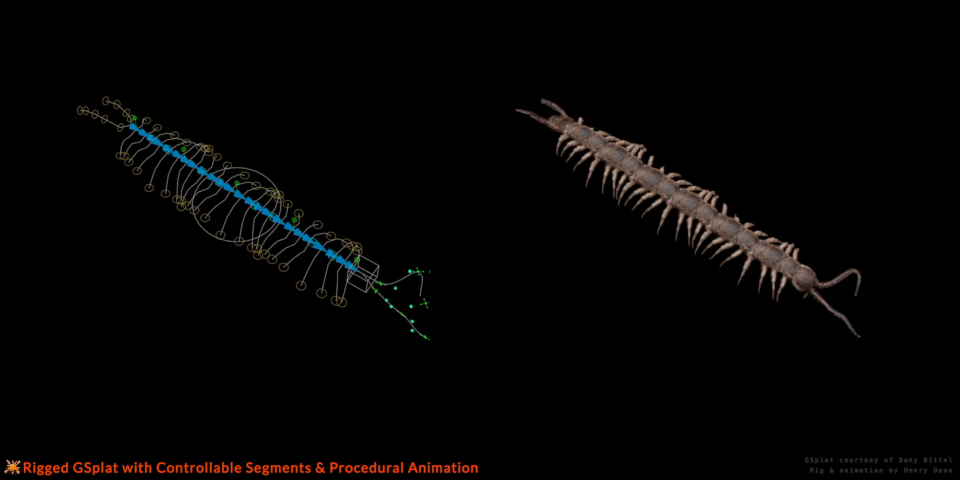
3D Gaussian Splatting: train, relight, and even rig and animate Gaussian Splats
Of the features that are shown in the video, one of the biggest is what looks to be a new set of tools for generating and manipulating Gaussian Splats.
Now gradually being supported in DCC software, 3D Gaussian Splatting provides a new way to reconstruct real-world objects from source images or video and render them in 3D.
The video shows Gaussian Splats being generated inside Houdini – in this case, being trained on a 3D scene rather than real-world reference, using TOPs (Task Operators).
It will also be possible to relight and render Gaussian Splats in Karma, Houdini’s render engine.
Excitingly, it will also be possible to rig and animate Splats – something we haven’t seen in other software – with the video showing a rigged Splat of a centipede with procedural limb animation.
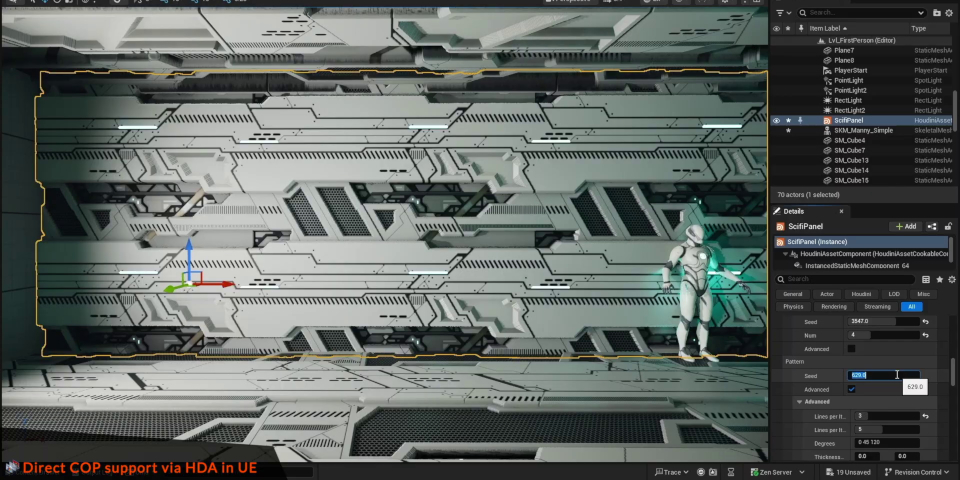
Copernicus: new tools for texture synthesis and VFX
The video also shows a lot of new features in Copernicus, the new 2D and 3D image processing framework introduced in Houdini 20.5, initially for texture synthesis and image manipulation.
The video shows new features for pattern generation, from a UV Shape node to Neural Cellular Automata.
It also takes Copernicus into the realm of VFX, showing a ‘ripple solver with adjacency maps and time shift’, used to create striking surface effects on a 3D statue at the start of the video.
There will also be “direct COP support via HDA in Unreal Engine”, so presumably, it will be possible to adjust exposed parameters for Copernicus nodes in assets imported into the game engine as Houdini Digital Assets.
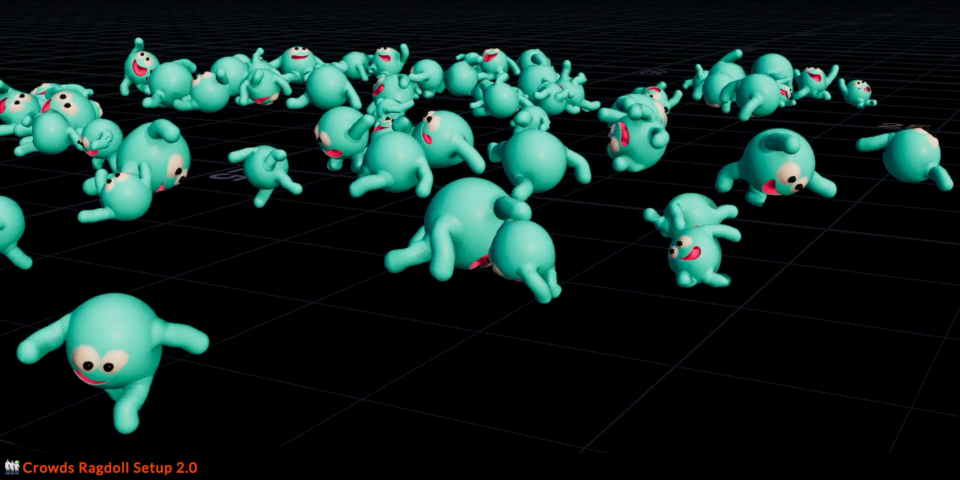
KineFX, crowds and CFX: updates to rigging, animation and grooming
KineFX, Houdini’s character rigging and animation framework, gets further updates, with a section of the video showing IK Limits and Set Driven Keys.
The Motion Mixer, introduced in Houdini 21 for combining existing animation clips, gets support for nested clips.
Other animation and character FX features shown in the video include readymade biped retargeting recipes, and updates to ragdoll setup for crowd simulation and groom workflow.
Simulation: new Fireworks and Magic FX recipes, and faster Voronoi fracturing
The video doesn’t show a lot of changes to Houdini’s simulation toolsets, but there are readymade recipes for fireworks and magic effects.
The rigid body dynamics toolset gets faster Voronoi fracturing.
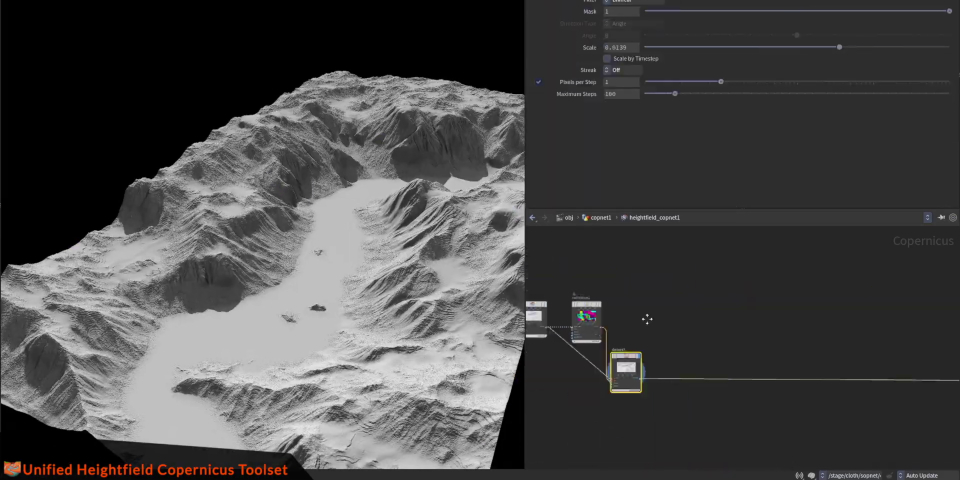
Other new features: updates to retopology, USD authoring and terrain generation
Other features shown include a Rectangular method for the Quad Remesh node, for converting high-poly source geometry to even quads.
The video also shows USD structures being authored using SOPs, Houdini’s geometry nodes, rather than using LOPs.
There are also new workflows for generating terrain inside Houdini, including a unified Copernicus heightfield toolset.
And while it isn’t called out in the on-screen captions, the in-software footage suggests that Houdini’s user interface has been overhauled, or at least refreshed.
Price, system requirements and release date
SideFX hasn’t announced a release date for Houdini 22 yet, but in recent years, its sneak peek videos have usually been posted around a month ahead of the public release.
You can find details of current pricing and system requirements in our story on Houdini 21.
Read more about Houdini on SideFX’s website
(No more information on Houdini 22 at the time of writing)
Have your say on this story by following CG Channel on Facebook, Instagram and X (formerly Twitter). As well as being able to comment on stories, followers of our social media accounts can see videos we don’t post on the site itself, including making-ofs for the latest VFX movies, animations, games cinematics and motion graphics projects.