
Maxon releases Redshift 2026.7
Redshift’s hex tiling now supports normal map rotation via UV Context Projection nodes.
Maxon has released Redshift 2026.7, the latest version of the GPU-accelerated renderer for VFX, motion graphics and visualization work.
The update extends the hex tiling system introduced in the previous release, and adds support for depth of field in Redshift Live, the software’s new real-time render engine.
In addition, Redshift is also now available for Revit and available in beta for Archicad.
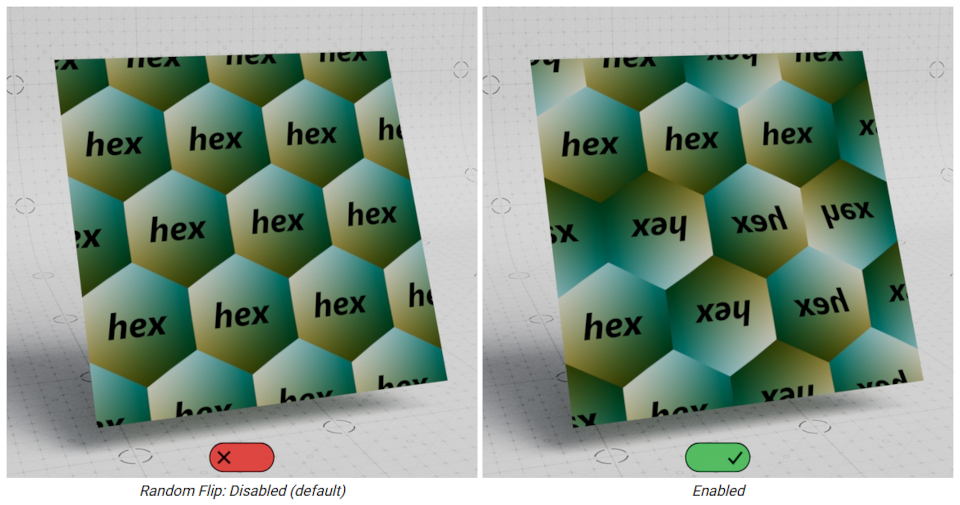
Hex tiling: support for random tile flips and normal map rotation
Introduced in Redshift 2026.6, hex tiling minimizes visible repeats in textures by tiling them in a hexagonal grid, not a standard square grid.
Texture maps are broken up into hexagonal tiles, and the position, rotation and scale of the tiles are randomized, before blending between the tiles to achieve a seamless look.
To that, Redshift 2026.7 makes it possible to flip individual hex tiles randomly, adding even more random variation to the results.
In addition, normal maps now work correctly when rotated with a UV Context Projection node, as shown in the video above – something that also works with conventional square tiling.
Redshift Live: support for depth of field restored
The update also adds support for depth of field in Redshift Live, Redshift’s new real-time render engine, which replaced the old Redshift RT engine in Redshift 2026.4.
The new engine is said to be more stable than its predecessor, and also runs on macOS, but lacked some of the features of Redshift RT – something the latest update partially rectifies.
Now available for Revit as part of Maxon’s Redshift for Archviz initiative
In addition, Revit is now available for Revit, Autodesk’s BIM software, and available in beta for Archicad, Graphisoft’s equivalent.
The releases form part of Maxon’s Redshift for Archviz initiative to extend Redshift’s user base beyond the entertainment market, and follow the new Vectorworks edition.
The Revit edition includes new features aimed specifically at architectural work, including AI-based context-aware searches of library assets, and streamlined import of vegetation assets.
They’re outside CG Channel’s area of coverage, but you can find details in this blog post.
Price and system requirements
Redshift 2026.7 is compatible with Windows 10+, glibc 2.28+ Linux and macOS 14.0+.
The integration plugins are compatible with 3ds Max 2018+, Cinema 4D 2023+, Houdini 19.0+, Katana 5.0+, Maya 2018+ (Maya 2022+ on Linux), Vectorworks 2026.4+ and ZBrush 2023+.
The software is rental-only. Subscriptions cost $49/month or $289/year.
Read a full list of changes in Redshift 2026.7 on the Redshift forum
(Login required)
Have your say on this story by following CG Channel on Facebook, Instagram and X (formerly Twitter). As well as being able to comment on stories, followers of our social media accounts can see videos we don’t post on the site itself, including making-ofs for the latest VFX movies, animations, games cinematics and motion graphics projects.