
Chaos releases V-Ray 7 Update 3 for 3ds Max
Chaos has released V-Ray 7 for 3ds Max, Update 3 (V-Ray 7.3 for 3ds Max), the latest version of the production renderer for architectural visualization, VFX and motion graphics.
Key changes include native parallax interiors, a new Quick Sun Caustics option for faster-rendering caustic effects, and the option to relight 3D Gaussian Splats inside V-Ray.
V-Ray GPU, the software’s hybrid GPU/CPU render engine, now supports AMD GPUs.
The update was released alongside V-Ray 7 Update 3 for SketchUp and Rhino, which share some of the same new features.
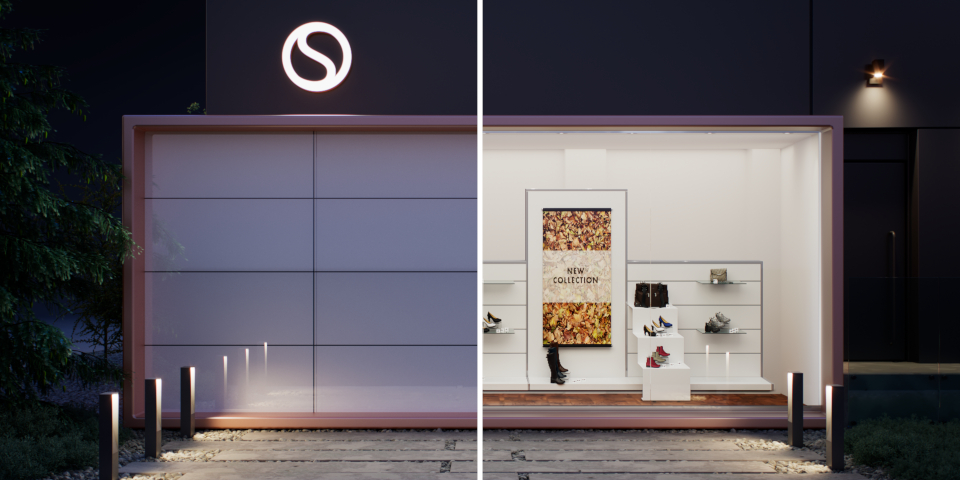
Parallax interiors add realism, but not geometry, to rendered buildings
New features in V-Ray 7.3 for 3ds Max include native parallax interiors, for adding realistic interior depth to rendered buildings without the need to create any actual internal geometry.
When applied to a window on the exterior facade of a bulding, the new VRayParallaxTex texture give the illusion of a 3D interior behind it.
The workflow removes the need to use third-party OSL-based parallax shaders.
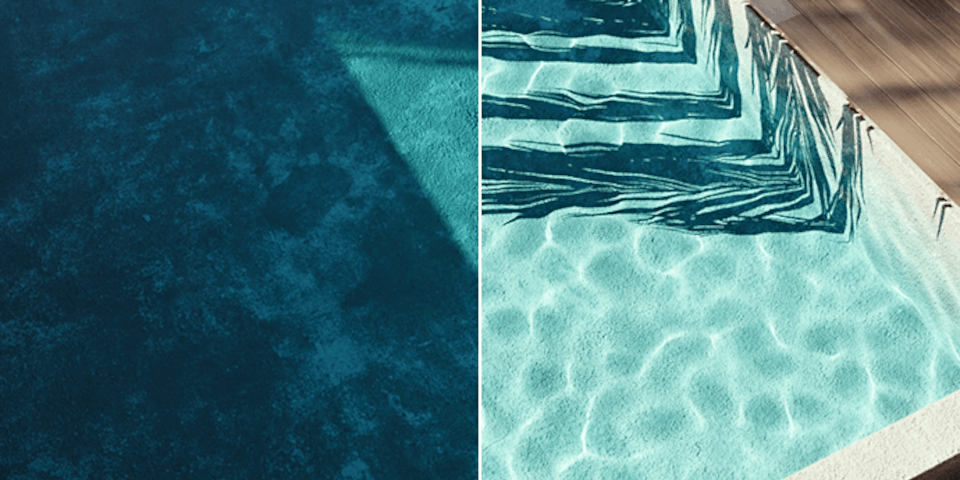
New Quick Sun Caustics option for faster-rendering caustic effects
In the standard V-Ray Material, a new Quick Sun Caustics option generates believable caustic effects below water surfaces without the need for a full photon setup.
They are currently only supported when rendering on the CPU, not the GPU.
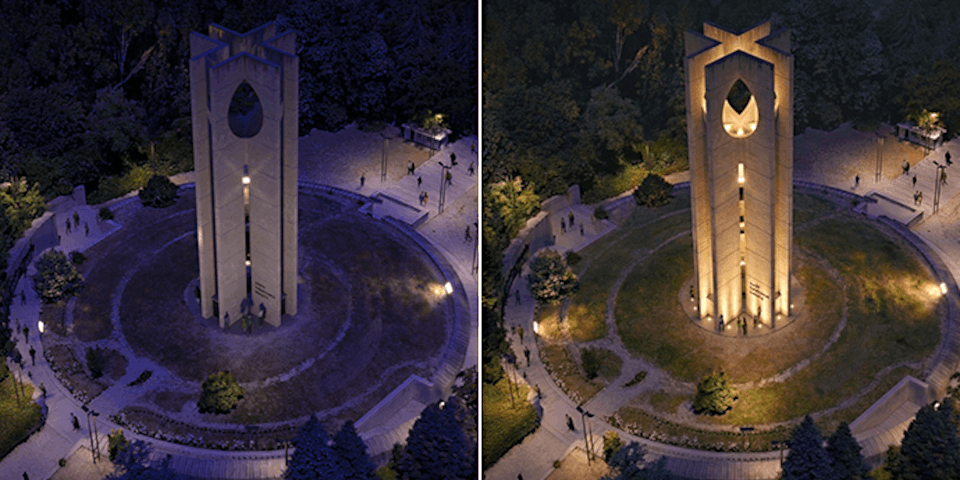
Relight 3D Gaussian Splats inside V-Ray
Support for 3D Gaussian Splats, introduced in V-Ray 7.0 for 3ds Max, has been further extended, with scene lights now illuminating 3DGS objects, making it possible to relight them.
The Gaussian splat loader also now supports animated splats.
Updates to the Physical Camera, VFB and Chaos Scatter
There are also updates to other existing features, with the option to make individual objects visible or invisible to the V-Ray Physical Camera.
It is also now possible to lock the focus of the Physical Camera to an object.
The V-Ray Frame Buffer (VFB) gets a new histogram display.
And when using Chaos Scatter, object scattering can now be controlled by VRayDecal decals.
Pipeline integration improvements include support for the BigTIFF file format, and support for 3ds Max particle and fluid simulation software tyFlow’s tyBitmap textures in V-Ray GPU.
Updates to the cloud-based AI tools
Outside the core software, the cloud-based AI tools available with V-Ray subscriptions have been updated, with the maximum resolution of the AI Material Generator raised to 4K.
The accuracy of the AI Enhancer has been improved, particularly for large surfaces.
V-Ray GPU now supports AMD GPUs
But for users of AMD hardware, arguably the biggest change in V-Ray 7.3 for 3ds Max is that V-Ray GPU now supports AMD GPUs again, for the first time in eight years.
Support has been implemented via AMD’s HIP framework, also used in Redshift and Blender’s Cycles renderer, rather than the original OpenCL-based implementation.
In Chaos’s internal tests, performance on AMD GPUs is “competitive”: slower than equivalent NVIDIA GPUs on standard scenes, but faster on large scenes that need out-of-core rendering.
You can read about AMD support in V-Ray GPU in detail in this story.
Price and system requirements
V-Ray 7.3 for 3ds Max is compatible with 3ds Max 2021+, running on Windows 10+. It is rental only. You can find pricing for current subscription plans in this story.
Read an overview of the new features in V-Ray 7.3 for 3ds Max on Chaos’s website
Read a full list of new features in V-Ray 7.3 for 3ds Max in the online release notes
Have your say on this story by following CG Channel on Facebook, Instagram and X (formerly Twitter). As well as being able to comment on stories, followers of our social media accounts can see videos we don’t post on the site itself, including making-ofs for the latest VFX movies, animations, games cinematics and motion graphics projects.