
Chaos releases V-Ray 7.4 for Maya
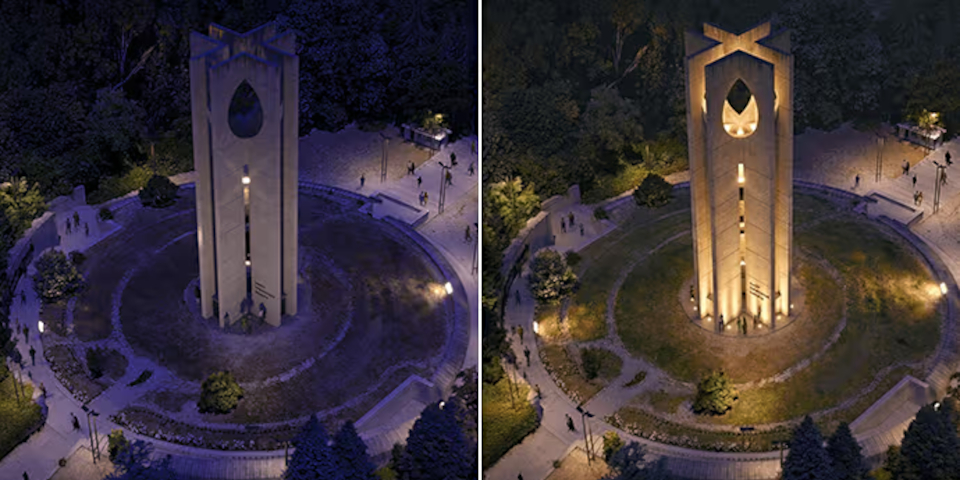
V-Ray 7.4 for Maya makes it possible to relight 3D Gaussian Splats inside the software.
Chaos has released V-Ray 7.4 for Maya (V-Ray 7 for Maya Update 4), the latest version of the Maya edition of the renderer, used in VFX, animation and motion graphics pipelines.
The update improves performance by “up to 13%” on Windows, adds support for GPU rendering on AMD GPUs, and improves support for 3D Gaussian Splats and for Maya’s Bifrost toolset.
Chaos has also integrated Veras, its architectural AI tool, with V-Ray for Maya, making it possible for architectural artists to use V-Ray renders as sources for AI image generation.
At the time of writing, the product website hasn’t been updated, but according to the release notes, Update 4 was actually released last week.
Performance: 13% speed boost on Windows and support for AMD GPU rendering
One significant change in V-Ray 7.4 for Maya is simply performance: according to Chaos, rendering is “up to 13%” faster on Windows, and up to 6% on Linux.
Users of AMD GPUs get a further speed boost, since the release is the first since V-Ray 3 to support AMD processors in V-Ray GPU, the software’s hybrid GPU/CPU render engine.
Support for AMD GPU rendering, which has been implemented using the open-source HIP framework, had previously been rolled out in the 3ds Max and Blender editions of V-Ray.
Check out our original story on AMD GPU rendering in V-Ray for a deeper dive into the typical boost in render speed, and the exact AMD processors supported.
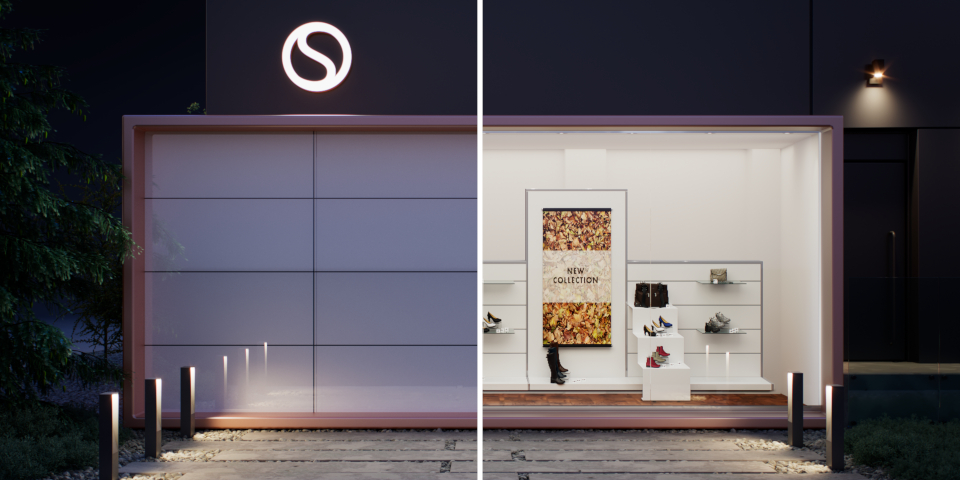
V-Ray’s new parallax interiors system, shown here in the 3ds Max edition of the renderer.
Parallax interiors add visual depth to rendered buildings
New features include native support for parallax interiors, for adding realistic interior depth to rendered buildings without the need to create any actual internal geometry.
When applied to a window on the exterior facade of a bulding, the new VRayParallaxTex texture give the illusion of a 3D interior behind it.
The workflow removes the need to use third-party OSL-based parallax shaders.
Relight 3D Gaussian Splats inside V-Ray
Support for 3D Gaussian Splats, introduced in V-Ray 7 for Maya, has been extended, with new controls for relighting splats inside V-Ray.
Unwanted regions of splats can also now be clipped out when rendering on GPU.
Updates to existing features
Other updates to existing features include a new quick caustics option in VRayMtl.
V-RayToon, V-Ray’s toon shading system, gets new controls for inwards and outwards toon lines, and a new global line width multiplier.
Object instancing and distribution system Chaos Scatter gets the Chaos Scatter Lister, a single place in the UI to control scatter geometry.
Scatter models also now support VRayDecal, and can be visualized as meshes in the viewport.
V-Ray GPU now supports OSL, GLSL and MDL shaders when rendering on macOS with Metal.
The VFB gets a new Histogram Layer, and Foreground and Background folders in the fixed stack of layers.
Better support for Bifrost and USD for Maya
V-Ray 7.4 also improves support for some of Maya’s key features, particularly Bifrost, its node-based framework for building simulations.
The most fundamental change is that V-Ray can now render Bifrost graphs natively, rather than users having to cache the graphs, then import them back into V-Ray.
V-Ray for Maya also now supports Bifrost 3, the latest version of the framework, rolled out earlier this year in Maya 2027.
The renderer also now supports a lot more Bifrost features, including meshes and strands, instances, animations, and for assigning materials through the Bifrost graph.
The update also adds support for USD for Maya 0.35 and 0.36, the versions of the USD plugin used by the Maya 2027 releases.
Now integrated with architectural AI visualization tool Veras
Finally, Chaos has integrated Veras, the architectural AI visualization tool it acquired last year, with V-Ray.
Both viewport and final-quality renders can be used as sources for AI image generation in Veras.
The workflow is targeted at architectural visualization work rather than VFX or animation, but you find more details in the video above.
Price and system requirements
V-Ray 7.4 for Maya is compatible with Maya 2024+, running on Windows 10+, RHEL and Rocky Linux, and macOS 11.0+. It is rental-only.
V-Ray Solo subscriptions cost $89.15/month or $540/year. V-Ray Premium subscriptions cost $129.90/month or $778.80/year, up $10/month or $60/year since the previous release.
Read a full list of new features in V-Ray 7.4 for Maya in the online release notes
Have your say on this story by following CG Channel on Facebook, Instagram and X (formerly Twitter). As well as being able to comment on stories, followers of our social media accounts can see videos we don’t post on the site itself, including making-ofs for the latest VFX movies, animations, games cinematics and motion graphics projects.