
Otoy releases OctaneRender 2026.1
Originally posted on 3 December 2024 for the alpha, and updated for the stable release.
Otoy has released OctaneRender 2026.1, the latest version of the GPU production renderer.
The release adds a number of long-awaited features, including support for 3D Gaussian Splats, native MaterialX and OpenPBR support, and a new meshlets system for streaming 3D geometry.
Meshlets were originally scheduled for the OctaneRender 2023 release cycle, and 3D Gaussian Splats and MaterialX for the OctaneRender 2024 releases.
Other changes include trace sets, neural radiance caches, and better support for displacement.
Light and render 3D Gaussian Splats inside OctaneRender
OctaneRender 2026.1 makes a number of key features previously announced by Otoy available in a stable release of the software.
One is support for 3D Gaussian Splats, the new 3D scene reconstruction technology currently being adopted in both VFX and architectural visualization pipelines, and now supported in a range of other DCC applications and renderers, including Corona and V-Ray.
OctaneRender’s implementation supports loading both 3DGS data generated from real-world source images and video, and through generative AI.
Users can import PLY or SPZ files generated in software like Nerfstudio or Postshot, or generated using World Labs’ Marble AI model.
The data can then be lit and rendered inside OctaneRender, with imported splats casting shadows on themselves and other geometry, and showing up in reflections and refractions.
OctaneRender 2026.1 can now convert standard meshes to meshlets, reducing the GPU memory required for geometry data: in the video above, from 1.0 GB to under 0.3 GB.
Render much larger 3D assets with meshlet streaming
Another long-awaited feature in OctaneRender 2026.1 is meshlet streaming, a new system that Otoy describes as “like Unreal Engine’s Nanite, but for path tracing”.
It avoids the performance hit from going out of core – when the scene being rendered is too large to fit into GPU memory – at the cost of needing a fast SSD to stream in data at render time.
Converting a standard mesh to a meshlet mesh has to be done ahead of rendering, in what Otoy describes as a “fairly expensive” pre-processing step: conversion generates 4-5x as much data as the original source geometry, and takes some time to complete.
However, it only has to be done once per workstation: once generated, the meshlet data is stored in the OctaneRender cache directory, although it isn’t included in ORBX packages.
According to Otoy, the workflow is well suited to 3D scans and other high-resolution continuous polygonal geometry, but doesn’t work well for dense CAD files.
In the initial release, vertex motion blur and vertex displacement are not supported, and meshlets are only available when rendering locally, not on a network.
OctaneRender 2026.1’s virtual textures system lets you render large image textures without a performance hit: the video above shows a 462k x 387k texture being rendered in real time.
Render much larger image textures via virtual textures
OctaneRender 2026.1 also adds support for virtual textures.
They do for textures what meshlets do for geometry, making it possible to render assets that would otherwise not fit into GPU memory by streaming data interactively at render time.
As with meshlets, the virtual texture needs to be generated and cached ahead of rendering, so the tradeoffs for workflow are also similar.
In the initial release, virtual textures are only supported when rendering locally, not on a network.
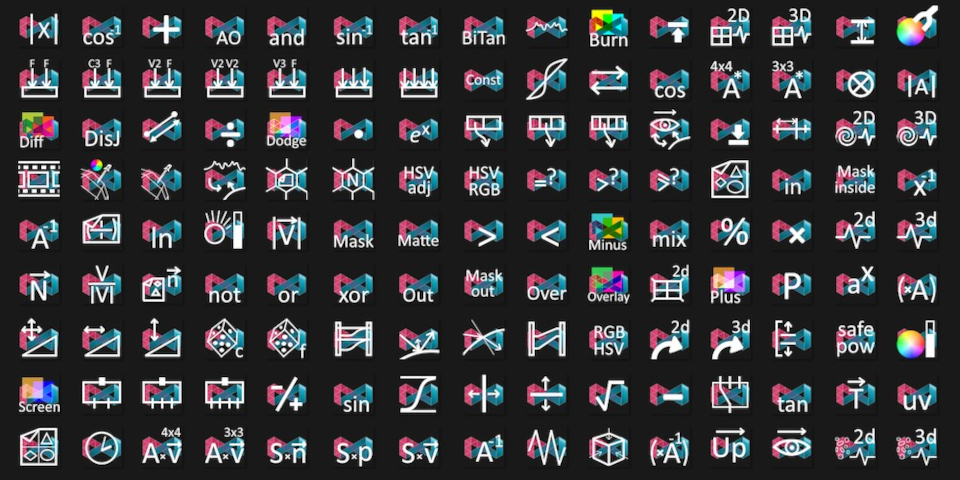
OctaneRender 2026.1 introduces native support for MaterialX, with users able to render existing MaterialX materials, or to author new material using a set of over 130 new Octane nodes.
Support for MaterialX and OpenPBR
OctaneRender 2026.1 also introduces native support for two new-ish open material standards.
Originally developed at Industrial Light & Magic, MaterialX is increasingly being adopted in VFX workflows, and is already supported in range of other renderers including Arnold, Houdini’s Karma renderer, RenderMan, Unreal Engine and V-Ray.
OpenPBR is a new open shading model intended to supersede the Adobe Standard Material and Autodesk Standard Surface, and is now supported in a range of DCC applications.
Other changes: trace sets, neural radiance caches and better displacement
Other new features in Octane 2026.1 include a trace sets system similar to those in renderers like Arnold, Redshift, RenderMan and V-Ray.
They enable users to art-direct renders by making objects invisible to other objects in the scene: for example, to prevent them from casting shadows, or showing up in reflections.
OctaneRender’s texture displacement system gets a new high quality mode, which also improves memory usage, and increases the maximum resolution of displacement maps to 16K.
In the initial release, it is restricted to meshes with UVs, but Otoy says that it plans to support other types of texture projection in future.
The release also adds a neural radiance cache (NRC) system, which uses a neural network trained at render time to reduce noise on first pixel, particularly in scenes with indirect lighting.
It is currently only supported on Windows and Linux, not in Octane X, the macOS edition of the software; and only for local rendering, not network renders.
There are also workflow improvements to shader authoring, and changes to license activation. You can find a full list of changes via the link at the foot of the story.
Price, system requirements and release date
OctaneRender 2026.1 is compatible with Windows 10+ and Linux, and requires a CUDA 10-capable NVIDIA GPU.
Octane X is compatible with macOS 14.0+ on Macs with Apple M1 and later processors, and with iPadOS 26+ on devices with A12 Bionic and later chips.
The software is rental-only, via Otoy’s Studio+ subscriptions, which cost €23.95/month, and which include integration plugins for 21 DCC applications, plus a range of third-party software.
Otoy also provides free ‘Prime’ editions of both OctaneRender and Octane X, which are limited to rendering on a single GPU, and which come with a smaller set of DCC integration plugins.
Read a full list of new features in OctaneRender 2026.1 on Otoy’s forum
Have your say on this story by following CG Channel on Facebook, Instagram and X (formerly Twitter). As well as being able to comment on stories, followers of our social media accounts can see videos we don’t post on the site itself, including making-ofs for the latest VFX movies, animations, games cinematics and motion graphics projects.