
See the 2026 Blender development roadmap
The Blender Foundation has posted its annual list of development projects to look forward to in Blender this year, forming a rough 2026 roadmap for the open-source 3D software.
The list includes several previously announced features, including layered textures, animation layers and non-photorealistic rendering, plus a new hair solver and updates to Cycles and VR.
Some of the features, including updates to the Eevee renderer, are due in Blender 5.1 in March; others may follow in Blender 5.2 and Blender 5.3 later this year.
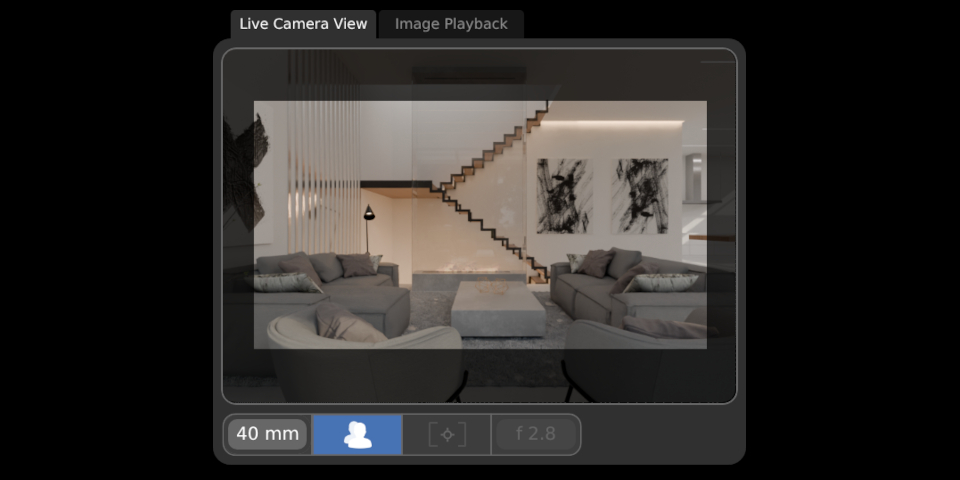
An early mockup of Blender’s upcoming VR Location Scouting system.
Blender 5.1: Eevee Next moves closer to feature parity with original Eevee
First up, one of the few features listed in the blog post to have a definite release target: improved planar reflections in Eevee, Blender’s real-time renderer.
Support for glossy reflection and refraction – which should improve the look of materials like glass in planar reflections – are due in Blender 5.1, now in alpha, and due for release in March.
The change is one of several intended to bring Eevee back to feature parity with builds prior to Eevee Next, the major overhaul of the renderer that rolled out in Blender 4.2 in 2024.
Blender 5.1 will also feature improvements to virtual reality navigation, although the other changes to VR, including the new location scouting system for virtual production, are further off.
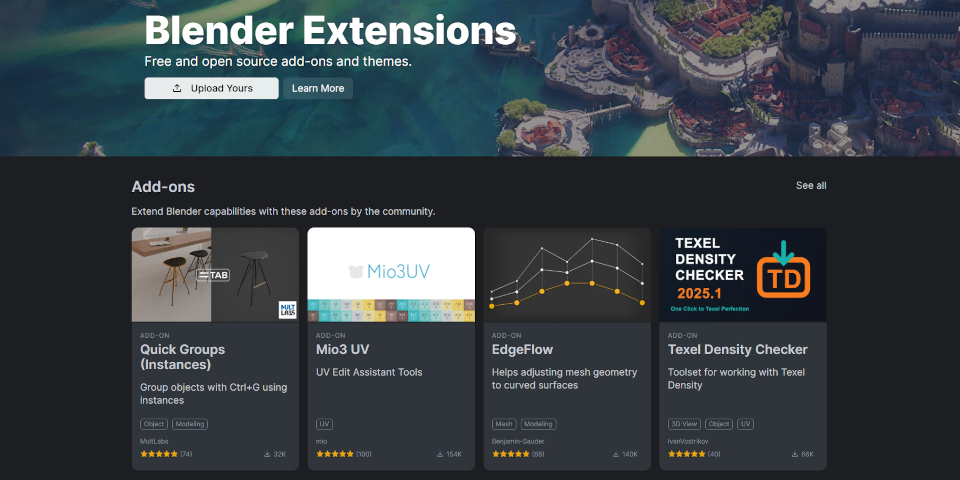
Blender’s Extensions platform. The online platform for community-approved Blender add-ons will also begin hosting a library of stock assets like materials in the first half of 2026.
First half of 2025: new online assets library hosted on the Blender Extensions platform
Another new feature scheduled for this year is a new online library of stock assets like materials, hosted on the Blender Extensions platform.
The blog post doesn’t list a specific release date, but says that the library is due in the “first half of the year”, which would make it available before the release of Blender 5.2.
Further off: major changes to materials, animation and rendering back in development
The remaining features listed in the blog post have no specific release targets, and include several major projects that have popped up in Blender roadmaps before.
For asset creation, that includes support for layered textures, originally identified as a development target as far back as 2022.
The work is described as “not straightforward”, and won’t feature in a stable release this year.
More likely to make a public release are animation layers, which originally formed part of the Animation 2025 project – unsurprisingly, originally due last year.
According to the latest blog post, work is expected to resume in Q2 “after a hiatus”, with the initial goal to expose the functionality in Blender’s Action Editor.
For rendering, the experimental non-photorealistic rendering system prototyped in 2024 with input from 3D anime firm DillonGoo Studios, is “now ready for development”.
Other planned changes include the long-requested Cycles texture cache, which should speed up rendering with with high-resolution textures in Cycles, Blender’s production renderer.
Cycles will also get a new OpenPBR node, extending support for the new open material standard, following initial changes rolled out in Blender 4.5 last year.
Further off: ongoing work on hair dynamics
In the simulation tools, work continues on the new hair dynamics system.
The initial goal for the update, originally announced in 2025, is a new Geometry Nodes-based hair solver with feature parity to the existing solver, which uses Blender’s particle system.
Further off: major updates to compositing and video editing
The latest blog post also covers features that we think are completely new, primarily to the Compositor and Video Sequencer.
The former include a “new approach for scene layered compositing” based around an effects stack similar to the new Compositor modifier added to the Video Sequencer in Blender 5.0.
According to the blog post, effects designed for the Sequencer will also work for the scene.
There are also some major new features planned for the Sequencer itself, including ripple- and three-point editing, media bins, Sequencer effects and GPU support.
The changes would bring the Sequencer more in line with dedicated video editing software, including free tools like DaVinci Resolve.
Further off: new Android port to enter active development
Work will also start on the new Android port of Blender, intended to make it possible to use the software on touch-enabled portable devices like drawing tablets.
The project, which is funded by a recent corporate donation from Wacom, follows the prototype iPad build showcased last year.
So how likely are these features to ship this year?
As we’ve noted in this story, quite a few of the features listed in the blog post have already been announced as part of previous Blender development roadmaps.
To give the Blender Foundation its due, many of the other major features from those roadmaps – for example, Eevee Next – have now been released publicly.
However, latest blog post acknowledges that not all of the projects announced last year have been completed.
Reasons cited include “overly optimistic … targets, over-scoping, unclear designs or scope, missed deadlines, limited resources, shifting priorities, my-dog-ate-my-homework, you name it.”
The Blender Foundation says it aims to do “better this year”, but it’s probably best not to count on using the new features in your projects until you actually see them in the release notes.
Release dates and system requirements
Blender 5.1 is currently scheduled for release in March 2026, with Blender 5.2 and 5.3 due to follow in July and November.
The current stable release, Blender 5.0, is compatible with Windows 8.1+, macOS 13.0+ and glibc 2.28+ Linux. It’s a free download.
Read a list of major development projects planned for 2026 on the Blender Developers blog
Download alpha builds of Blender 5.1 from the Blender website
Have your say on this story by following CG Channel on Facebook, Instagram and X (formerly Twitter). As well as being able to comment on stories, followers of our social media accounts can see videos we don’t post on the site itself, including making-ofs for the latest VFX movies, animations, games cinematics and motion graphics projects.