
Autodesk releases Flame 2027.1

Originally posted on 21 April 2026. Scroll down for details of the Flame 2027.1 update.
Autodesk has begun its Flame 2027 release cycle, the latest annual series of updates to Flame, its compositing, finishing and effects software
Flame 2027 itself introduces a new annotations system, two new AI models for generating depth maps from footage, and support for OpenTimelineIO.
Flare and Flame Assist, the cut-down editions of Flame, have also been updated.
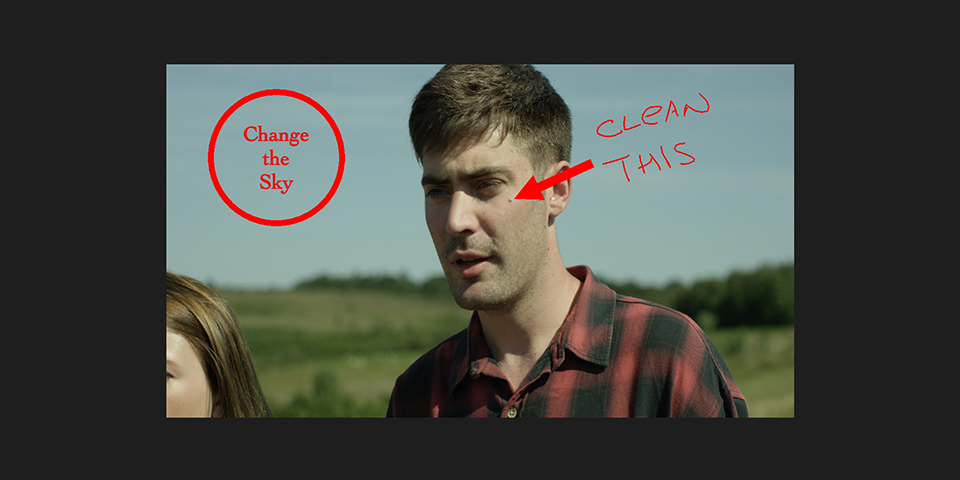
New Annotations system lets you mark up clips directly inside Flame
New features in Flame 2027 include the Annotations system, for adding notes on the changes required to a shot directly inside Flame, rather than on a dedicated shot review platform.
Users can add text or drawn annotations – lines, arrows, circles, rectangles or freehand strokes – to clips in the Player or the viewports.
Markers and Segment Markers with annotations are indicated in the timeline, and the annotations themselves can be selected from the Timeline Ribbon.
New AI models generate depth maps from indoor and outdoor scenes
There are also new AI features, in the shape of two new machine learning models for generating depth maps from still images or clips: ML Depth Indoor and ML Depth Outdoor.
As the names suggest, they generate depth data for entire scenes, unlike the existing Face Analysis model, which is optimized for human faces.
The depth data can then be used to create mattes in the Selective object or standalone ML Depth nodes.
It is also possible to load custom depth AI models in ONNX format.
Autodesk Assistant provides AI-generated answers to natural language tech questions
Flame 2027 also integrates Autodesk Assistant, the technical help system rolled out in other recent Autodesk product updates like Maya 2027.
It searches Autodesk’s documentation to provide answers to simple natural-language questions.
Workflow improvements: better preservation of metadata and custom tokens
Workflow improvements include better preservation of metadata.
The frame-based metadata of imported clips can now be edited via a new Metadata node, and written to the OpenEXR file header when exporting a file sequence or publishing content.
It is also now possible to create custom tokens, for adding readymade text strings to text fields that support them.
Other changes include the option to add Markers in the Effects environment.
Pipeline integration: OpenTimelineIO support
Flame also now supports OpenTimelineIO, the new open standard for editorial cut information.
OpenTimelineIO files can be opened in the Conform environment, in the same way as AAF, XML or EDL files.
However, the current implementation only supports “basic OTIO sequences” and not the effects and effect properties from other VFX software that supports OpenTimelineIO.
In addition, Burn, Flame’s network rendering solution, is now supported on macOS, and there is a new command-line tool, flame_backup, for backing up and restoring projects.

Updated 27 July 2026: Autodesk has released Flame 2027.1.
New features include the Isolate tool, which replaces the existing GMask Tracer as the tool to use to create mattes using Selective Objects or machine learning models.
It is available both as a node, and via Timeline FX.
A new Pixel Expression node applies color-based changes to clips using the GLSL shading language. Unlike the existing Matchbox node, you don’t need to create a shader and a UI outside Flame: the shader code can be added directly to the UI.
Support for ProRes RAW in Media Import
The other major change is support for ProRes RAW clips in MediaHub, making it possible to import footage recorded on devices like the iPhone 17 Pro and Atomos recorders.
In addition, the machine learning upscale models have been replaced with new models that require less memory on Linux, making it possible to run them on higher-resolution clips.
Pricing and availability
Flame 2027, Flame Assist 2027 and Flare 2027 are compatible with Rocky Linux 8.10/9.5/9.7 and macOS 14.0+. The software is available rental-only.
Flame subscriptions cost $650/month or $5,215/year. Flame Assist and Flare subscriptions cost $2,775/year.
The Autodesk website also still offers $5,215/year subscriptions to Lustre, the Flame product family’s color grading software, although it has not been updated since 2024.
Read a full list of new features in the Flame 2027 releases in the online documentation
Have your say on this story by following CG Channel on Facebook, Instagram and X (formerly Twitter). As well as being able to comment on stories, followers of our social media accounts can see videos we don’t post on the site itself, including making-ofs for the latest VFX movies, animations, games cinematics and motion graphics projects.