
Plasticity 2026.1 is out
Plastic Software – aka tools developer Nick Kallen – has released Plasticity 2026.1, the latest version of the popular hard surface modeling software.
The update introduces a new Export Hidden Line command, for generating technical drawings from 3D models, a new Slot command, and updates to a lot of the other core commands.
Users of the Studio edition of the software also get PolySplines, a new command for converting polygonal meshes into clean, editable NURBS surfaces.
A lightweight NURBS modeling app for concept art as well as industrial design
Released in 2023, and pitched as “CAD for artists”, Plasticity is a streamlined NURBS modeler.
The software is intended to provide a low-cost, artist-friendly alternative to tools like MoI and Fusion, and is aimed at concept art as well as industrial design.
It features a streamlined UI, with on-screen clutter reduced by context-sensitive widgets and pop-up UI panels, and uses key bindings and selection modes familiar to Blender users.
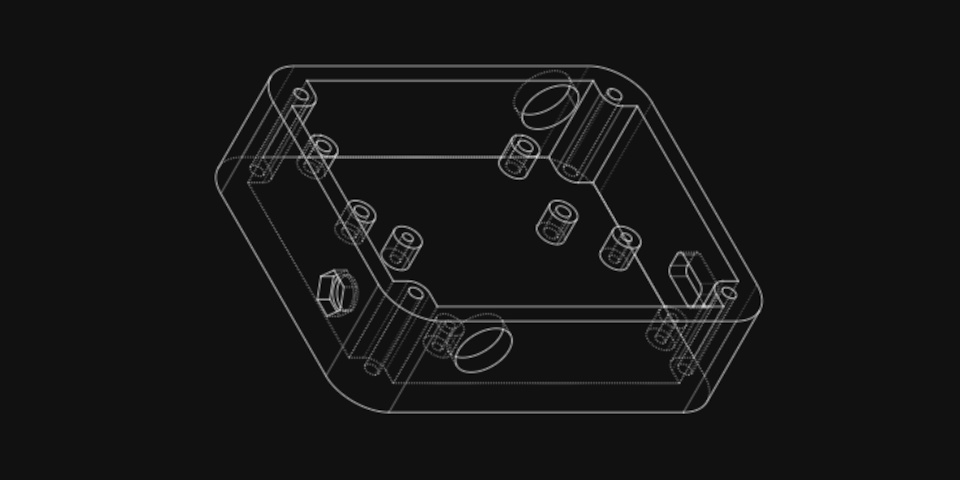
Plasticity 2026.1: new Export Hidden line command generates technical drawings
Major new features in Plasticity 2026.1 include Export Hidden Line, a new command for generating technical drawings from a model.
It renders the 3D object and converts it into SVG format for export, and supports line styling and coloring, hatching, hidden edge display, and a grid display template.
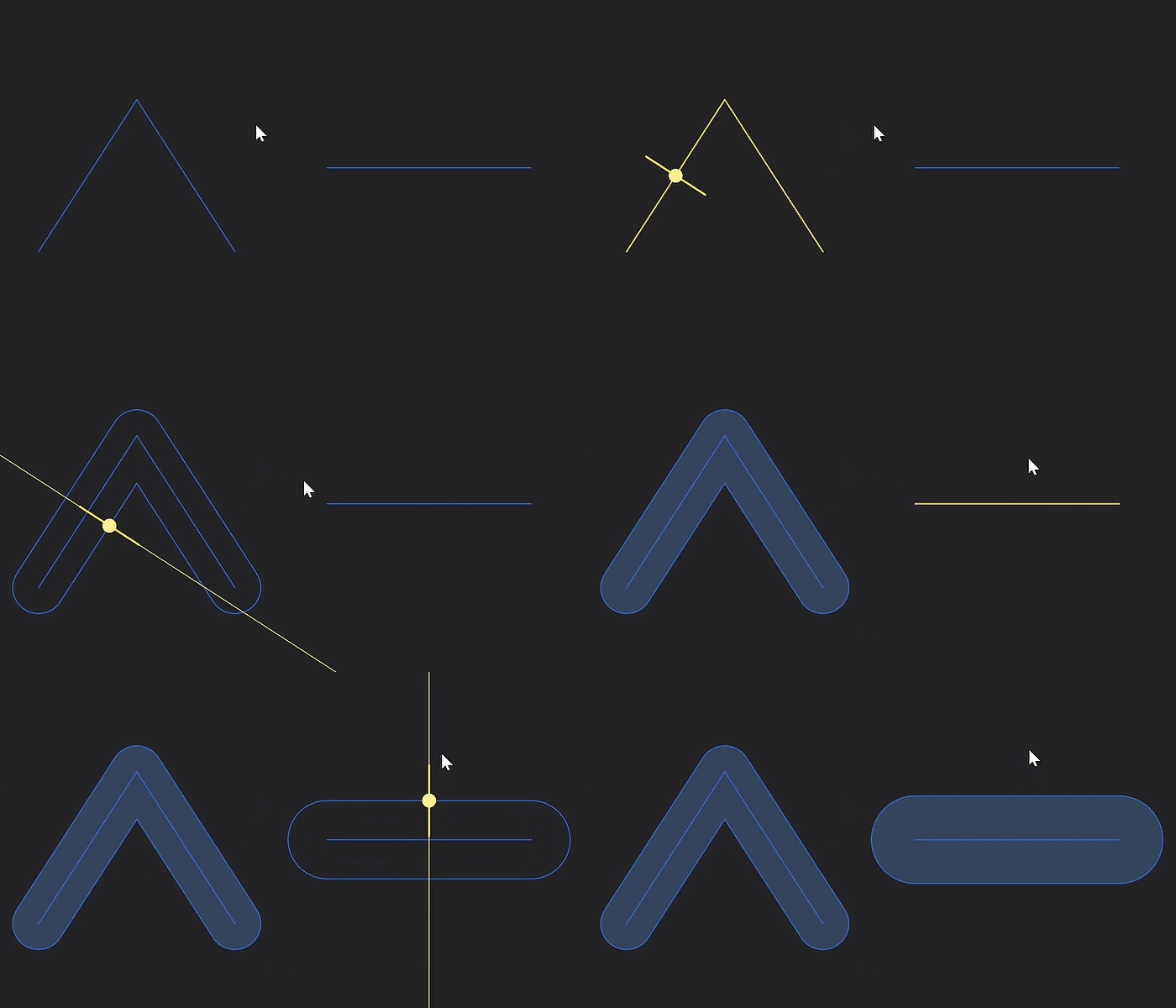
New Slot command and updates to other core commands
In addition, a new Slot command generates a closed slot shape – bolt slots, ventilation holes, and the like – by offsetting and capping an open curve.
There are also updates to 13 of the existing commands, including core operations like aligning curves, placing and mirroring objects, and extruding geometry.
Workflow and export improvements
Workflow improvements include a new search field in the Outliner, making it easier to find objects in complex scenes.
For precise adjustments, users can now enter precise distance values when using gizmo controls, and commands that use the input field now support greater numerical precision.
Pasting objects with materials into new scenes now preserves those materials.
There are also new controls to override the default length units or scaling when exporting OBJ and STL files, so that models appear at the correct scale when imported into other software.
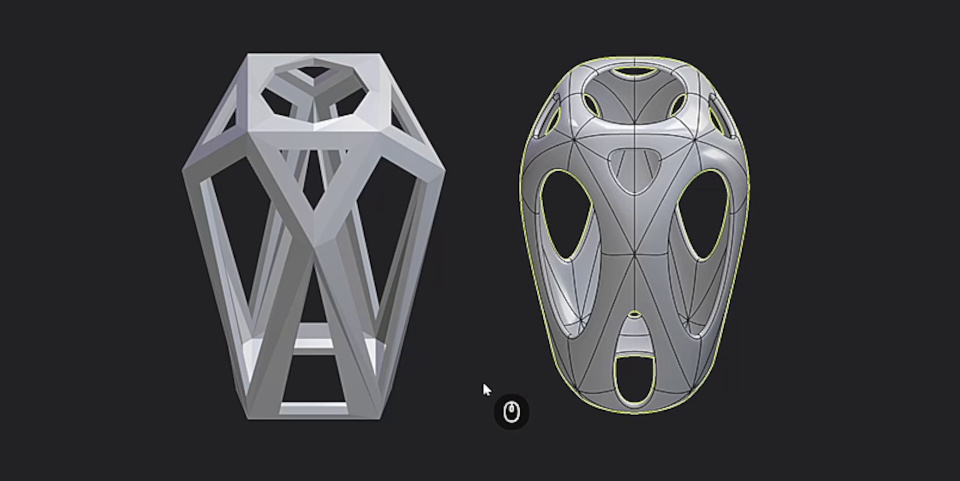
Studio edition: PolySplines converts poly meshes into clean, editable NURBS surfaces
Users of the more expensive Studio edition of the software also get PolySplines, a new command that converts a polygonal mesh into an editable NURBS surface with G2 continuity.
It produces “fewer and cleaner patches” than traditional Catmull-Clark subdivision, often used to convert low-poly source geometry into smooth surfaces.
Writing on X, Kallen says that he hopes PolySplines – developed by graphics researcher Jorg Peters – will become a “successor technology” to Catmull-Clark.
Price, system requirements and release date
Plasticity 2026.1 is available for Windows 10+, Ubuntu 22.04+ Linux and macOS 12.0+. In the online documentation, the release is also referred to as Plasticity 26.1.
Perpetual node-locked Indie licenses cost $175. Indie users can import and export files in OBJ, STEP, STL and Parasolid XT format, and import FBX files.
Studio licenses support a wider range of file formats and cost $299.
Read a full list of new features in Plasticity 2026.1 in the online release notes
Read more about Plasticity on the product website
Have your say on this story by following CG Channel on Facebook, Instagram and X (formerly Twitter). As well as being able to comment on stories, followers of our social media accounts can see videos we don’t post on the site itself, including making-ofs for the latest VFX movies, animations, games cinematics and motion graphics projects.