
Autodesk is discontinuing Mudbox, its digital sculpting software
Autodesk is discontinuing Mudbox, its digital sculpting software, previously used in concept art, game development, visual effects and motion graphics.
Sales and renewals of three-year subscriptions ended on 7 August 2026, with sales and renewals of monthly and annual subscriptions due to follow on 7 November 2026.
The change will bring to an end the 20-year history of a tool that was, in its heyday, used by international VFX studios like Wētā FX, and won its creators technical Oscars.
So what was Mudbox – and how is it related to Wētā FX?
First released two decades ago, Mudbox was one of a wave of CG art tools to come out of legendary visual effects facility Wētā FX, then still known as Weta Digital.
The software was used in production on 2005’s King Kong, with Weta artists Andrew Camenisch, Dave Cardwell and Tibor Madjar leaving the studio the following year to develop it as a product.
The trio were recognised for their work at the 2014 Scientific and Technical Academy Awards.
Their Academy citation singled out Mudbox’s “powerful new design capabilities that significantly advance the state of the art in multi-resolution digital sculpting”.
Other Weta in-house tools to become off-the-shelf products include crowd simulation system Massive and 3D texturing painting software Mari, the latter now owned by Foundry.
How did Autodesk develop Mudbox?
Mudbox was quickly acquired by Autodesk, which bought Skymatter, its original developer, in 2007.
The software continued to receive regular updates for a decade following the acquisition, but by the mid-2010s, the pace of development had slowed to a crawl.
Although Autodesk “decided to reinvest” in Mudbox in 2017, leading to the introduction of a major new dynamic tessellation system in Mudbox 2018.2, it proved to be a blip.
While the firm continued to update Mudbox to run on current operating systems, no major new features were added.
When Mudbox 2027 was released this March, it was the sixth consecutive annual update with no new features listed in the release notes.
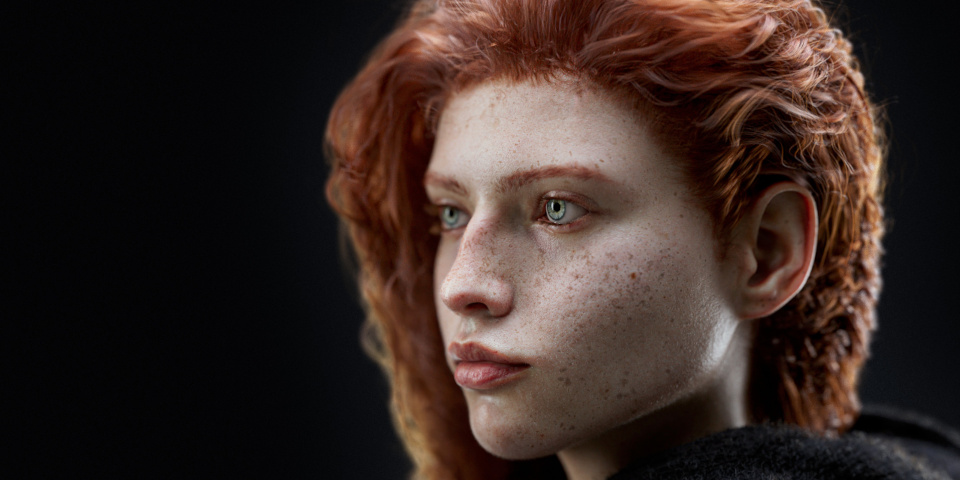
A fan-made recreation of Disney’s Princess Merida, sculpted by character artist Xhon Hysenaj, and used as the final promo image on Autodesk’s Mudbox website.
Why did people continue to use Mudbox for so long, if it didn’t get any new features?
In many ways, the surprising thing is not that Autodesk is now discontinuing Mudbox, but that it didn’t do so sooner.
Like the firm’s other products, Mudbox is subscription-only, and while monthly subscriptions remained fixed, the price of annual subscriptions rose several times during those six years.
Although $105/year isn’t expensive by Autodesk standards, it still meant that artists were paying simply to continue using the software, not to get any new functionality.
That many were willing to do so is a testament to just how much people liked Mudbox.
Although there were powerful alternative digital sculpting tools, even at the time of its release, the main alternatives – ZBrush and 3DCoat – both have non-standard interfaces and workflows.
What people liked about Mudbox, right from the original beta, was its intuitive layer-based workflow – if you were coming from other CG software, it just felt familiar.
When will sales of Mudbox end?
Autodesk is now finally ending sales of Mudbox.
Sales and renewals of three-year subscriptions ended on 7 August 2026, with sales and renewals of monthly and annual subscriptions due to follow on 7 November 2026.
Mudbox remains part of Autodesk’s Media & Entertainment Collection product bundle, but the current 2027 edition will be the last to include the software.
Anyone who had a subscription – to Mudbox itself, or to the Collection – on 7 August 2026 will get a five-year subscription to Mudbox 2027, to “support this transition”.
The free subscription includes access to technical support and security fixes, but only for the first three of the five years; and will not include any new features or bugfixes.
Why has Autodesk discontinued Mudbox?
Autodesk’s reasons for discontinuing Mudbox are interesting: according to the online FAQs, it’s due to there having been “no significant feature enhancements since Mudbox 2019”.
It’s almost as if, if you don’t continue to actively develop a product, but expect people to continue paying to use it, they eventually become unwilling to do so – even if it does take years.
Read Autodesk’s announcement that it is discontinuing Mudbox
Have your say on this story by following CG Channel on Facebook, Instagram and X (formerly Twitter). As well as being able to comment on stories, followers of our social media accounts can see videos we don’t post on the site itself, including making-ofs for the latest VFX movies, animations, games cinematics and motion graphics projects.