
Maxon faces online criticism over new generative AI tool
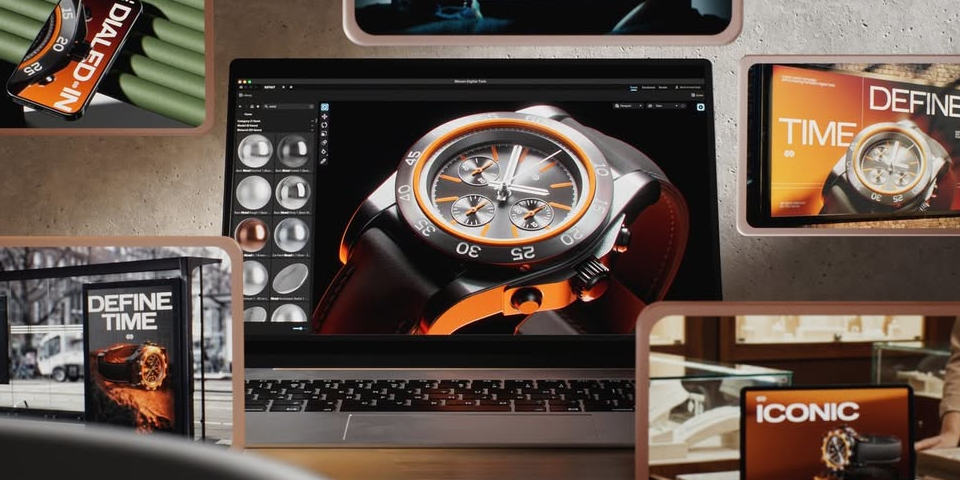
From billboards to digital ads, social, and packaging, Maxon Digital Twin creates consistent product visuals faster.
AI-generated backgrounds, auto-matched lighting/reflections/perspective, and 100% product accuracy.
SEE IT FIRST all week @ #CES2026 – AMD booth (West Hall, W223)— Maxon (@MaxonVFX) January 8, 2026
Cinema 4D and ZBrush developer Maxon is facing online criticism over Maxon Digital Twin, an upcoming tool with generative AI capabilities that it is demoing at this week’s CES trade show.
The tool, which turns a 3D model into a “marketing-ready asset with AI-generated backgrounds”, has attracted a lot of negative comments on social media, particularly on X.
Several question whether Maxon’s users want generative AI features in its software, and call for the company to “read the room”. Others simply call it “a terrible idea”.
Below, we summarize what is known about Maxon Digital Twin, and why it is attracting flak.
What is Maxon Digital Twin?
We don’t know yet, exactly: according to Maxon’s social media posts, it is being shown publicly for the first time at CES, the giant US tech show.
According to the Maxon Instagram account:
“Maxon Digital Twin turns your 3D product model into a marketing-ready asset, letting you pair it with your own backgrounds, including ones generated with AI.”
While that could mean a new feature within an existing Maxon application, like Cinema 4D or ZBrush, we suspect that it’s a new product.
Although the image Maxon has shared online is quite low-resolution, it seems to show an actual application called Maxon Digital Twin, with a simple, seemingly beginner-friendly interface.
You are decreasing a value of your software with this
— Jakovicz (@JakoviczKawecki) January 8, 2026
What happened after Maxon announced Maxon Digital Twin?
Maxon posted announcements about Maxon Digital Twin across its social media accounts, but not surprisingly, the strongest response was on X.
The feedback seems to have been worst on the ZBrush X account, with many users – and some news sites – assuming that the announcement referred to an upcoming feature in ZBrush.
The tweet has now been deleted, but according to Creative Bloq, every response to it was negative.
The announcements on other Maxon social media accounts remain online, including the ZBrush Instagram account, although the post there has been edited.
Hello Maxon! Your community of 3D artists does not want GenAI features. Just thought we would kindly let you know 🥰 https://t.co/G6Gv8hzZ0p
— Is this a 3D model? (@IsThisA3DModel) January 9, 2026
What feedback has Maxon Digital Twin received on social media?
Some of Maxon’s other posts are now beginning to attract comments similar to those on the deleted tweet, particularly the main Maxon X account.
At the time of writing, the responses – some from accounts traditionally critical of generative AI, but others from individual designers and 3D artists – are almost universally negative.
Some are simple call-outs of “AI slop”, but a repeated theme is for the need for Maxon to “read the room” when it comes to the opinion of its user base about generative AI.
One VFX TD posted that “you lost your mind and don’t even know your customers”.
So who are the customers for Maxon Digital Twin?
Maxon hasn’t said explicitly what kind of users Maxon Digital Twin is aimed at, but its social media posts suggest that it is being targeted at marketing rather than entertainment work.
The tweet on the Maxon X account notes that it is intended to create “consistent product visuals faster” for uses ranging “from billboards to digital ads, social, and packaging”.
A post on LinkedIn adds that “Digital Twin automatically handles the details that usually break AI composites: perspective, lighting, and reflections.”
“Result: fewer revisions, faster approvals, and consistent visuals.”
Is Maxon following Adobe’s lead with Maxon Digital Twin?
That description sounds reminiscent of features like Generative Background in Substance 3D Stager, Adobe’s 3D visualization software.
Of all the major CG software manufacturers, Adobe has pushed hardest for generative AI capabilities in its tools.
However, whereas a lot of Adobe’s revenue comes from business and marketing professionals, Maxon’s current product line consists solely of artist tools.
The users of those existing tools include a lot of freelancers and small studios, many of whom are concerned about generative AI cutting them out of the loop with their clients.
Maxon’s announcement of Digital Twin, with its focus on “ads, social, and packaging”, suggest that the firm may now be moving outside that traditional user base, to create new tools that follow Adobe’s playbook.
We’ve contacted Maxon to ask for more information about Maxon Digital Twin and its intended user base and will update this story if we hear back.
Have your say on this story by following CG Channel on Facebook, Instagram and X (formerly Twitter). As well as being able to comment on stories, followers of our social media accounts can see videos we don’t post on the site itself, including making-ofs for the latest VFX movies, animations, games cinematics and motion graphics projects.